
interstitialRedirectModalTitle

interstitialRedirectModalMessage

Places We Protect

Edward H. McCabe Nature Preserve

Delaware

A short dock floats at the edge of the Broadkill River. The still surface of the water reflects the tall leafy green trees that line the river's edge.
Broadkill River Floating dock at TNC’s Edward H. McCabe Preserve. © TNC

The McCabe Nature Preserve offers opportunities to observe a variety of Delaware’s ecosystems.

Overview

Description

Donated to The Nature Conservancy in 1993 by Constance McCabe, the Edward H. McCabe Nature Preserve is TNC's most-visited public preserve in Delaware. It features a wide range of habitats found along the Broadkill River that harbor diverse plants and animals within a small area of the Delmarva Peninsula.

When Constance McCabe donated her family’s land to TNC, about 25% of the land was used for farming. Material dredged from the river channel had also been deposited in a five-acre clearing located on the property. Today, TNC manages the preserve as a natural area that is open for controlled public use.

Leashed dogs are allowed at the McCabe Preserve. Please be sure to bring waste bags to clean up after your dog and take your trash with you. Ticks can be found at McCabe in large numbers from the early spring to late fall—always check yourself and your dogs for ticks after being outdoors. Staying on the trail can help reduce exposure to ticks.

Access

OPEN TO THE PUBLIC

Hours

Open daily, from dawn to dusk.

Wheelchair Accessible

McCabe features a 0.63-mile Universal Access route that meets ABA ODAAG guidelines and is designed to accommodate visitors of all abilities. The trail surface is carefully constructed with compacted aggregate and incorporates gentle crowning to ensure stability and accessibility across varying terrain.

Highlights

Hiking, birding; access by canoe or kayak via the Broadkill River.

Size

143 acres

Explore our work in Delaware

A packed gravel universal access trail at McCabe Preserve winds through the forest.
Bennett’s Trail Bennett’s Trail begins near the preserve entrance and follows a 0.63-mile Universal Access route designed to accommodate visitors of all abilities. © Sarah Walter/Penn Trails

Bennett’s Trail—A Universal Access Trail

Bennett’s Trail begins near the preserve entrance and follows a 0.63-mile Universal Access route designed to accommodate visitors of all abilities. The trail surface is carefully constructed with compacted aggregate and incorporates gentle crowning to ensure stability and accessibility across varying terrain.

The trail takes visitors through sections of developing woodlands and maturing forests featuring white oaks, red oaks, Virginia pines, loblolly pines, beech, hickories and American hollies. This diverse forest habitat supports a rich variety of wildlife, providing critical food and shelter for migratory birds, resident woodland species and other native wildlife throughout the year.

During the summer months, visitors can expect to be welcomed by a chorus of birds, including wood thrush, scarlet and summer tanagers, pine warblers, red-eyed vireos, great crested flycatchers, eastern phoebes and many others.

As you explore McCabe, you’ll notice ongoing stewardship efforts, including invasive species removal to support healthy, native habitats. As the landscape continues to grow and evolve through both active management and ecological succession, Bennett’s Trail offers a dynamic experience that showcases how conservation practices strengthen biodiversity while creating a welcoming and accessible way for everyone to connect with nature.

Views from Edward H. McCabe

From tidal marshes to upland forests, there is much to discover at Edward H. McCabe Preserve.

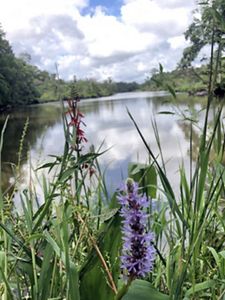
Two plants, one with thin red flowers and the other dense purple blooms, grow on the banks of a wide river. Tall shoots of grass grow up around the flowers. White clouds are reflected on the water.
View from the end of a narrow floating dock with high metal sides. The dock leads to a path that disappears into a thick forest. Trees line the banks of the wide river that stretches to the horizon.
The top of kayak is seen in a body of water surrounded by orange leafed trees.
Three small birds open their mouths wide inside of a nest containing two blue eggs.
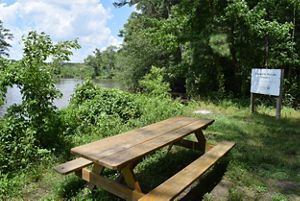
A wooden picnic table sits next to a wide river. The table is shaded by the tall trees that grow along the river bank. A sign in the background reads, Edward H. McCabe Preserve.
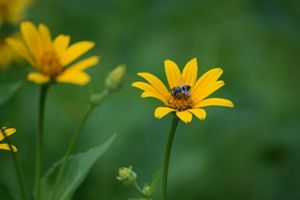
A honeybee gathers pollen from a yellow flower.
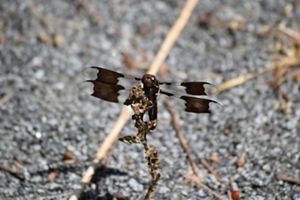
A common whitetail dragonfly perches on a withered plant. The dragonfly's body is dark brown. It has four translucent wings, each with a large brown marking.
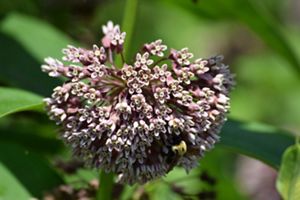
A fuzzy yellow moth is nestled into the blossoms of a pink flower. The flower has multiple stems of five petal flowers.
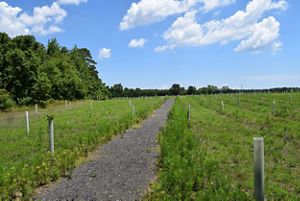
A wide gravel path cuts through an open meadow. Tall white plastic tree tubes are evenly spaced across the meadow protecting young oak saplings. A mature forest grows at the edge of the meadow.
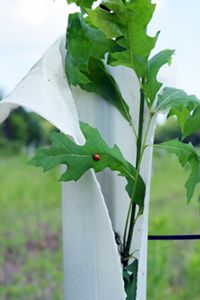
An oak sapling grows through the top of a tall plastic tube meant to reduce browsing by deer. A red ladybug sits on one of the leaves.

Visitor Information

  • Hiking

    The McCabe Preserve offers several great opportunities for low-elevation hiking. Meander through the Meadow Walk, where you can observe native shrubs, grasses and pollinators. Or, take a longer walk along Bennett’s Trail to enjoy tranquil views of the Broadkill River.

    Paddling

    While a roadside parking area provides access to hiking trails on the preserve, arriving by canoe is the way to go for adventurous visitors. Just two miles away in the historic town of Milton, visitors can put in their canoes and meander down the Broadkill River before heading ashore.

    A floating dock provides access to the preserve from the river. Please note that there is no parking available at or near the dock. To reach the dock overland, take a half-mile hike through the preserve. The dock is open for use by non-motorized watercraft such as canoes, kayaks and stand-up paddleboards. Visitors can use the dock during normal preserve hours. Fishing and swimming from the dock or adjacent shorelines are prohibited. A picnic table is available near the dock; please remember to take your trash with you.

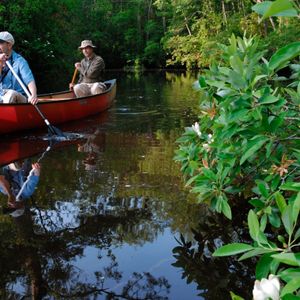
    Canoeing along the Broadkill River offers a unique perspective on this important river corridor. Keen eyes will pick out large-mouth bass, bluegill and, in the spring, migrating river herring as these surface-feeding fish seek out insects.

    Birding

    Whether you’re exploring by land or water, there is never a bad season to enjoy the sounds of birds overhead. Bring your binoculars and spot several unique species around McCabe Preserve. Over 100 bird species have been observed along the 143-acre preserve, including bald eagles, osprey, bluebirds and more. By water, the majestic great blue heron, with its pale blue-gray color, sharp bill, long legs and six-foot wingspan, is hard to miss as it glides above the river.

  • Wildlife

    The McCabe Preserve provides a rich habitat for more than 100 species of birds. Its diverse landscape includes hardwood forests, old fields, tidal freshwater areas, forested wetlands and agricultural fields. This combination attracts a variety of migrant and nesting birds, including waterfowl, raptors and songbirds.

    Tidal Marshes

    Adjacent to the open water of the Broadkill River, emergent tidal marshes thrive. These marshes are regularly flooded, creating diverse habitats dominated by flowering herbs and sedges. Look out for marshmallow, arrow arum, pickerel weed, broad-leaved arrowhead and tear-thumb.

    Scrub-Shrub Wetlands

    As you move further from the river’s edge, the marsh transitions into scrub-shrub wetlands. Here, you’ll find swamp rose, arrow-wood, buttonbush, common alder and the globally rare seaside alder.

    Inland Habitats

    Just inland from the tidal marsh and associated wetlands, stands of red maple, blackgum and loblolly pine survive the oxygen-depleted swamp soils by growing on mounded hummocks. The Atlantic white cedar, prized for its durability, can be identified by its reddish-brown, fibrous trunk, conical crown and evergreen scale-like leaves. The swamp understory harbors fragrant bayberry bushes and spectacular spring-blooming wild azaleas.

    Fist State History

    Upland forests of various ages make up much of the preserve and provide insight into the history of McCabe. Like many areas in Delmarva, these upland forests were logged to make way for farms following European settlement. Explore the preserved landscapes and discover the natural beauty that has evolved over time.

  • The highlight of the avian year is the spring passage of colorful migratory neotropical songbirds, including a variety of warblers and thrushes, on their way north. May is the best month to witness this phenomenon. Songbirds pass through the area again in September and early October.

    During the summer, several species nest and raise young. In winter, great horned and screech owls call after dark and waterfowl search the riverside wetlands for food.

    Keep an eye on the ground as well, as eastern box turtles are commonly seen foraging for food along the trails.

    During warmer months, the wildflower meadow comes alive with colorful blooms that are enjoyed by monarch and tiger swallowtail butterflies, among others.

  • We are creating a community science database of all kinds of life—from lichens to ants, mushrooms to plants, birds to mammals and everything in between for our preserves in Pennsylvania and Delaware.

    TNC's roots began with local citizens and scientists concerned about special places and species. That legacy continues today. Across our lands, we are utilizing iNaturalist—a digital platform that gives users an opportunity to share and discuss their findings.

    Our 14 preserve projects in iNaturalist currently have 2,709 observations of 1,219 species made by 47 observers. Of the 14 preserve projects, nine have observations recorded; help us increase that number and our understanding of the species—good and bad, native as well as invasive—that can be found on TNC lands across the state. This information can also help guide and inform our conservation staff's management and monitoring decisions.

  • While visiting the McCabe preserve, please DO:

    • Take precautions against ticks, mosquitoes, chiggers and sunburn.
    • Wear sturdy footwear.
    • Tuck pant legs into socks/shoes.
    • Apply insect repellent and sun protection.
    • Bring drinking water.
    • Watch for poison ivy.
    • Stay on marked trails.
    • Remove all litter. This is a “carry-in carry-out” preserve. (Don’t forget bags for dog waste if you’re bringing Fido.)
    • Keep your dogs leashed, and clean up after them.
    • Enjoy nature.

    Please Avoid:

    • Disposing of trash or other waste, including biodegradable materials.
    • Feeding or disturbing wildlife.
    • Releasing animals or introducing plants.
    • Hunting, trapping, fishing, digging, picking or removing plants, animals or other artifacts from the preserve.
    • Bringing motorized vehicles, ATVs, bicycles or horses. 
    • Bringing alcohol or firearms.
    • Camping, making fires or having cookouts.
    • Smoking.
    • Trespassing on private property adjacent to the preserve.
    • Having parties or playing loud music.
    • Swimming in the river.

Nature for All

The Nature Conservancy is dedicated to building a world where both people and nature can thrive together. Our mission is to protect lands and waters on which all life depends. We strive to offer opportunities for individuals of all ages, abilities, backgrounds and perspectives to develop a lifelong bond with the natural world. We believe that nature should be accessible to all, and we invite you to enjoy the outdoors safely and fairly at our public preserves. We all share one planet, and everyone is welcome here.

Reforesting McCabe

Since first acquiring the property in 1993, TNC has restored McCabe's forests to create wildlife habitat for migratory and resident birds and promote storage and filtering of water moving into the Broadkill River from nearby agricultural fields.

The green leaves of an oak sapling stick out above the top of a white projective tree tube.
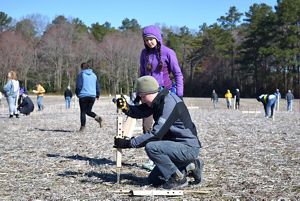
A man kneels on the ground to secure a white tube around a newly planted tree sapling. A woman in a purple jacket watches from behind him.
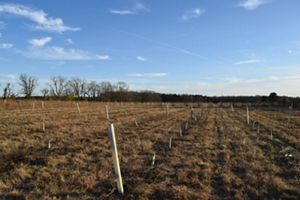
Rows of tall white plastic tubes fill an open field. Shorter cardboard tree shelters fill in the rows between the tubes.
Rows of tall white plastic tubes fill an open field. Leaves on thin branches poke up through the tops of the tubes.
Green and brown tall grasses grown in a field around small trees.
A small tree grows through the top of a plastic white tree tube in a reforestation site at McCabe Preserve.
Tree tubes at McCabe Preserve Young trees grow out of tree tubes at a reforestation site at McCabe Preserve. © John Hinkson/TNC

Tree Planting

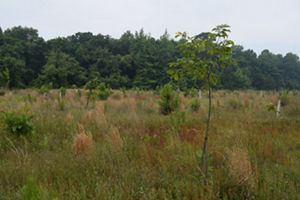
In 2019, The Nature Conservancy began restoring 39 acres of former farmland at McCabe Preserve back to native forest, launching a long-term effort that included planting more than 11,700 native trees and shrubs. Species such as black oak, red oak, pin oak, swamp white oak, white oak, chestnut oak, persimmon, dogwood, chokeberry and black cherry were carefully selected to create a diverse forest that supports wildlife and strengthens the surrounding ecosystem.

What was once cultivated for corn and soybeans is now transforming into a thriving habitat for birds, small mammals, toads and other wildlife. Native trees, shrubs and wildflowers provide food, shelter and nesting opportunities, while attracting a wide variety of insects that support the local food web. During the early years of the project, regular mowing between tree rows helped young saplings establish themselves by reducing competition from faster-growing vegetation.

This reforestation project is a powerful example of how conservation success takes root over time. Years of planning, stewardship and care have helped the site flourish, and that work continues today as the forest matures. Dedicated volunteers have played an essential role along the way, assisting with tasks such as removing tree shelters, managing invasive and encroaching plants, and monitoring the health of the growing forest.

As these young trees continue to grow, they will provide increasingly valuable habitat for wildlife, improve water quality, store carbon and enhance the ecological resilience of the preserve for generations to come.

Interested in helping care for this growing forest? Visit the Volunteer section below to learn how you can get involved.

A small prescribed fire burns in a field at McCabe Preserve in front of the preserve sign.
Prescribed Fire Prescribed fire, also referred to as controlled burning, is a conservation tool used to manage invasive species and reduce the risk of wildlife. © Natasha Whetzsel/TNC

Prescribed Fire

In March 2024, The Nature Conservancy carried out the first prescribed fire at McCabe Preserve, using carefully managed fire to restore the native wildflower garden and portions of the reforestation site. Prescribed fire helps native plants thrive by reducing invasive species, increasing biodiversity and recycling nutrients back into the soil. Although the landscape may initially appear charred, fresh green growth quickly returns, often within just a few weeks.

Fire has been a natural force on this landscape for centuries, shaping the habitats and plant communities that native wildlife depend on. Today, prescribed fire continues to play an important role at McCabe Preserve, helping steward the land, restore ecological health and ensure these habitats remain vibrant and resilient for future generations.

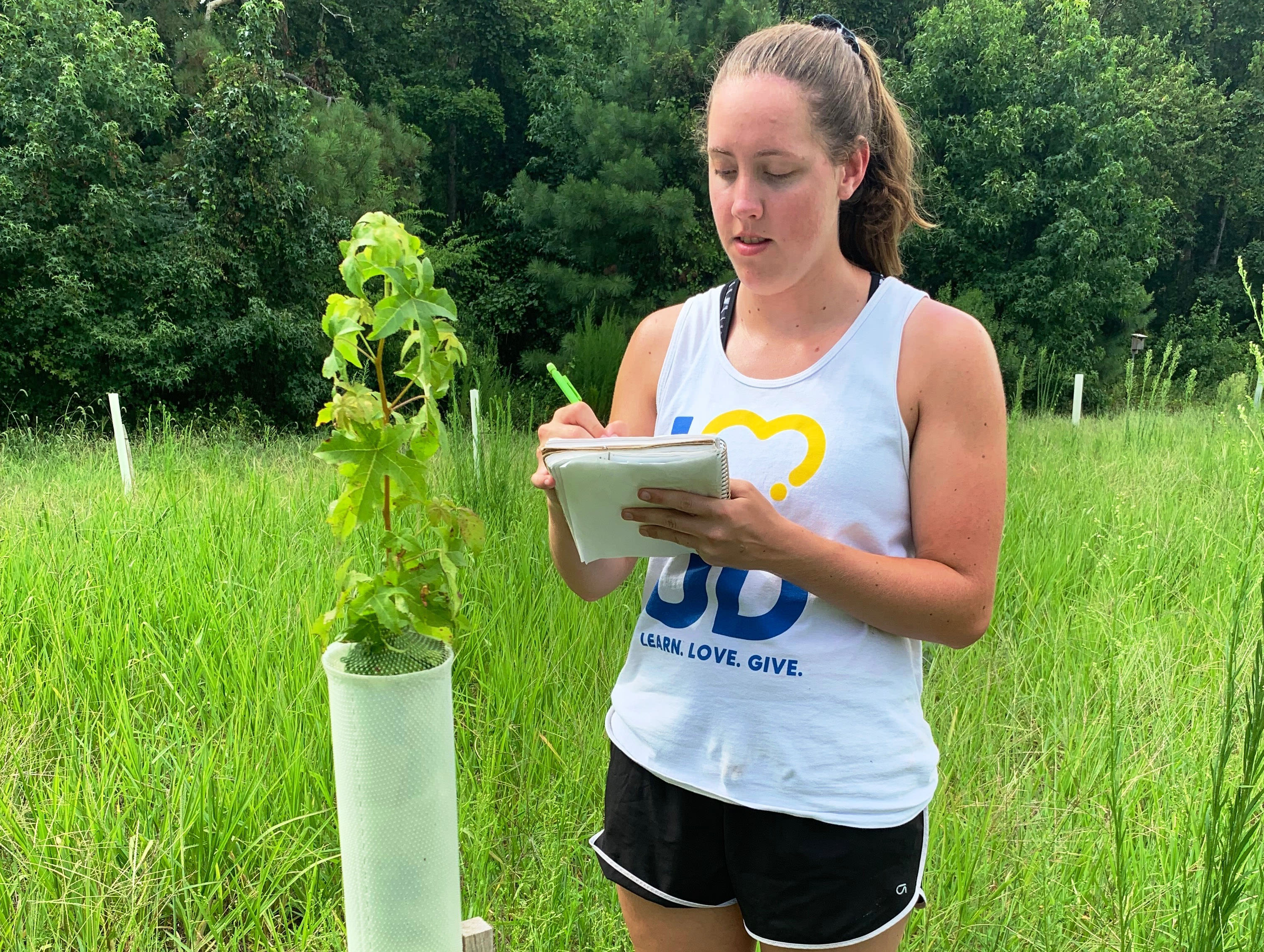
A volunteer records data in a reforestation plot.
Data Collection A Nature Conservancy intern, Tessa Hayman, gathers data on seedling survivorship. © Brooke Cherry

Volunteer at McCabe

Become a preserve monitor! Assist with monitoring McCabe Preserve on a regular basis (approximately 4-6 visits per year) to assess the condition and needs of the preserve and keep us informed of any issues. Preserve monitors are also asked to help remove smaller branches from trails and pick up litter. Volunteers are also needed at the McCabe Preserve’s 39-acre reforestation site to help stake up trees and cut back encroaching vegetation. Contact devolunteer@tnc.org for more information about becoming a preserve monitor.

Group volunteer events are occassionaly held at McCabe Preserve; these events will be listed on our Events page and on Facebook.

A note about visiting McCabe: Private parties at the McCabe Preserve are expressly prohibited. This is a privately owned nature preserve, and The Nature Conservancy reserves the right to restrict access to individuals and small groups who are actively using the trails and dock. Violators will be prosecuted.

Explore More Nature

Need more nature? Visit some of TNC's other preserves.

Find More Places We Protect

The Nature Conservancy owns nearly 1,500 preserves covering more than 2.5 million acres across all 50 states. These lands protect wildlife and natural systems, serve as living laboratories for innovative science and connect people to the natural world.

See the Complete Map